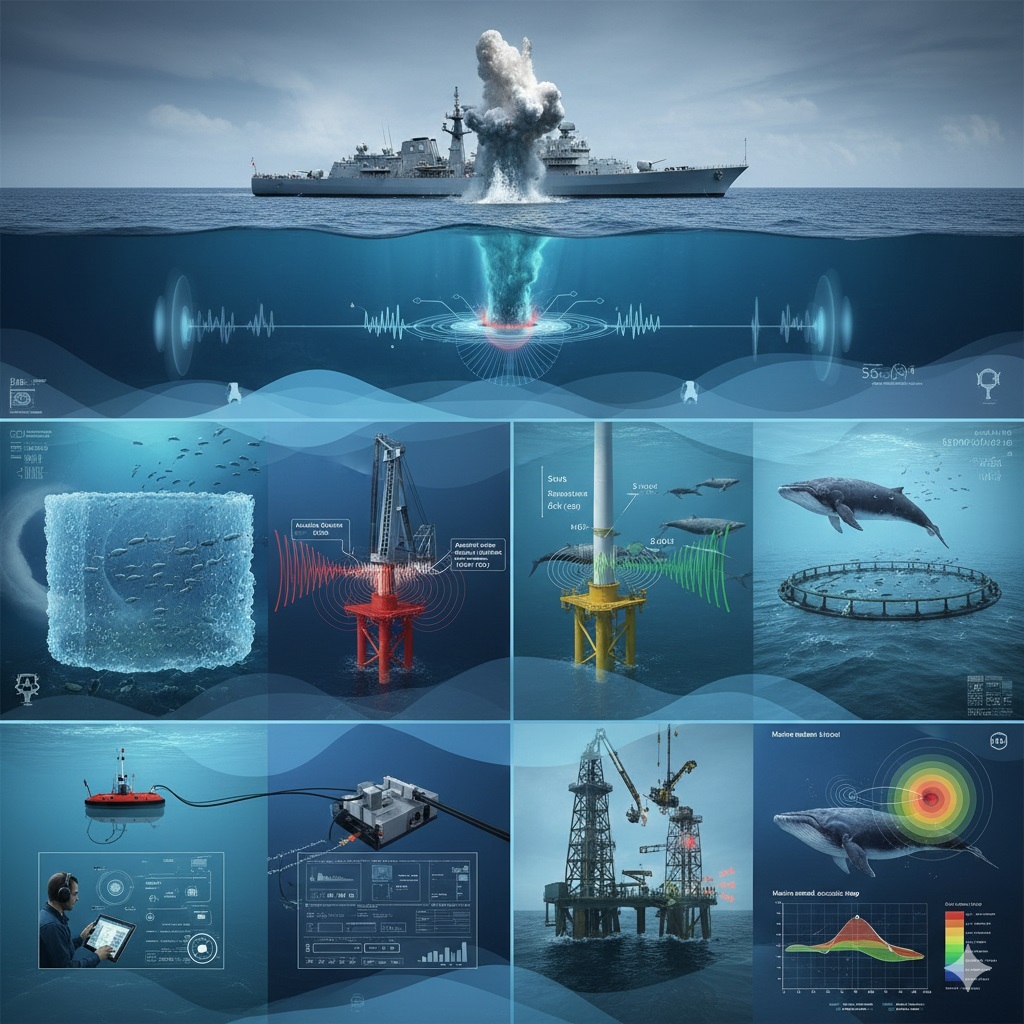
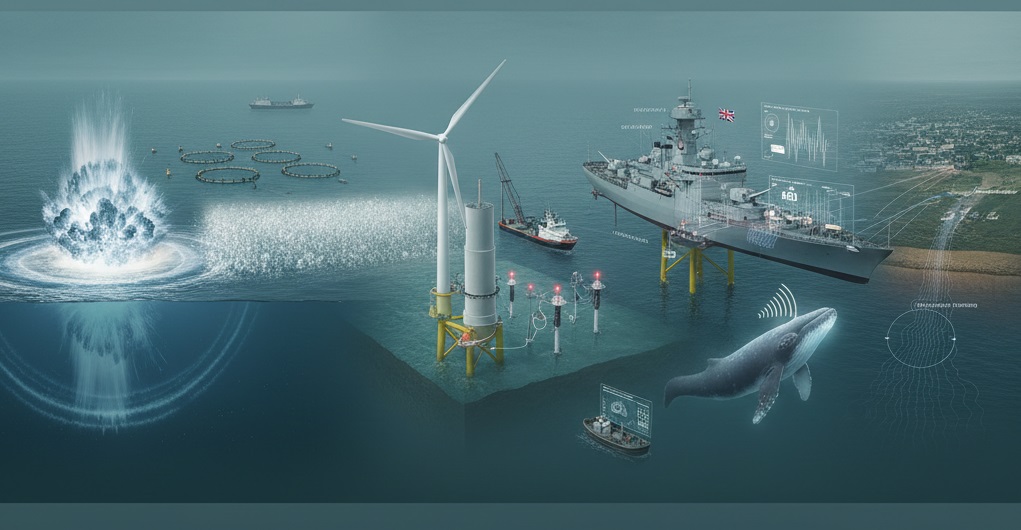
Underwater sound travels faster and further than in air, making acoustic management vital for marine industries. EngScience provides precision modeling and real-time monitoring to ensure your offshore projects meet international environmental standards and protective legislation.
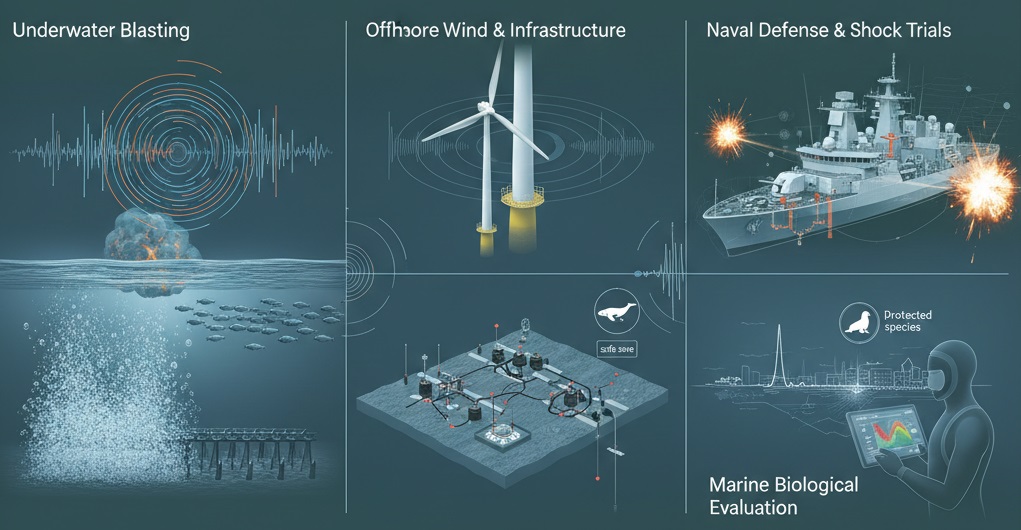
Underwater Blasting & Rock Excavation
We manage high-intensity shockwaves near sensitive receptors like fish farms and migration corridors.
Overpressure Modeling: Predicting shockwave propagation to define safe distances.
Aquaculture Protection: Evaluating impacts on caged fish (e.g., swim bladder integrity).
Bubble Curtain Design: Engineering air curtains to attenuate blast energy and protect biodiversity.
Offshore Wind & Infrastructure
Supporting the lifecycle of offshore assets, from foundation installation to decommissioning.
Pile Driving Analysis: Long-distance modeling to prevent auditory injury (PTS) in marine mammals.
Decommissioning Acoustics: Measuring the noise footprint of ROVs, cutting tools, and explosives.
Mitigation Verification: Validating acoustic deterrents (ADDs) and isolation sleeves.
Baseline Monitoring: Deploying hydrophone arrays to establish ambient noise levels.
Marine Biological Evaluation
We bridge the gap between physical acoustics and marine biology with actionable data.
Threshold Mapping: Comparing noise levels against biological safety limits for specific species.
Acoustic Ecology: Analyzing masking effects on biological communication and echolocation.
Real-Time Monitoring: Onsite technicians providing live data to allow immediate suspension of works if thresholds are breached.
Naval Defense & Shock Trials
Specialist consultancy for Underwater Shock Trials (UST) to test hull, equipment, and crew resilience.
Survivability Testing: Structural response and equipment shock ratings for warships.
Coastal Impact: Monitoring airborne overpressure and seismic vibration to protect mainland infrastructure.
Environmental Oversight: Implementing “soft start” protocols and risk mapping to protect marine mammals during naval testing.